statistics
-
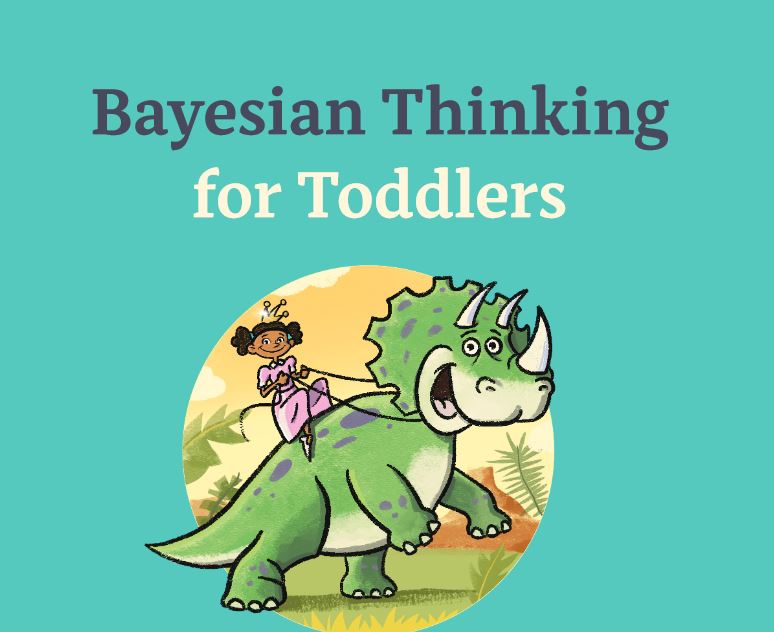
The Anti-Frequentist Baby
It’s possible to educate Bayesian statisticians from infancy. Eric-Jan Wagenmakers, of JASP fame, shows us how with his new book, Bayesian Thinking for Toddlers. Read more
-
Not-Quite-in-Time Logistics
Writing in the Atlantic, Helen Lewis explains shortages and panic buying as a failure of efficiency; the weakness of just-in-time logistics. Sorry Helen, but you’re a logistics n00b; even this old retired Lieutenant Colonel knows about arcane loggie stuff like stock levels and re-order points (zero is NOT a good re-order point). When the military Read more
-
(Clinical) Trial of the Century
The World Health Organization steps up to the coronavirus plate with what appears to be history’s most ambitious screening experiment. On Friday, the World Health Organization (WHO) announced a large global trial, called SOLIDARITY, to find out whether any can treat infections with the new coronavirus for the dangerous respiratory disease. It’s an unprecedented effort—an Read more
-
Make Every Vote Count
Every semester, I begin my introductory biostatistics class with a simple “show of hands” experiment based on the Bouba-Kiki effect. Prior to the experiment I “volunteer” two students at random to count hands, and when hands are raised, each of my volunteers counts silently and independently. Invariably, the counts DO NOT MATCH. We briefly discuss Read more
-
Tsoo Tsoon to be a Tsunami
Andrew Gillen at the Texas Public Policy Foundation says “Two Tsunamis are About to Hit Higher Education,” when :..the Department of Education released post graduate earnings and debt data broken down by college program — which will have a revolutionary impact on higher education.” A bit of poking around on the web gets you to the Read more
-
Counting is DIFFICULT
Eleven million? or 22 million? A new Yale/MIT study estimates the illegal alien population in the US somewhere in the range of 16.5 to 29.1 million (for us statisticians, that’s 22.8 ± 6.3 million). That’s a margin of error larger than the entire population of Los Angeles (3.99 million). Worse yet, this estimate suggests that Read more
-
Pick a Name at Random
Found a cool new tool useful in simulating data sets: the Random Name Generator. What a great way to fake up some data! I’ve been using it in a course that includes survey sampling. Read more
-
Caught in the Draft
In December of 1969, the Selective Service held a lottery to determine the order in which young men would be called up for the Draft. My number was a low 53, and that set the course for much of my adult life. Turns out, the odds were against me. A nice description of what happened. Read more
-
News Flash! Men and Women are Different…
..despite the fact that some folks wish is wasn’t so Neurosexism: the myth that men and women have different brains https://t.co/OOtJaICQ0t — Gina Rippon (@ginarippon1) February 27, 2019 In fact, the National Institute of Health requires that sex be included as a variable in all studies: Sex can influence health & disease in many ways, Read more
-
Past performance is no indication of future…
I am such a slow pony. I’ve just web-surfed my way into discovering Rob Hyndman’s Time Series Data Library, which has hundreds of time-series datasets suitable for every teaching need. I was looking for one of my old faves, from that hoary old classic, Forecasting, Time Series, and Regression, and voila! there it is. Read more
 The Random Texan